Your ears bring you music, the sound of your friend’s voice over lattes at Nolan River Coffee House and the dialogue from your favorite TV show. Despite all they do, many people forget the importance of proper ear care. Let’s look at a few common habits people have that can harm their ears and how you can avoid them.
Playing Their Music Too Loud
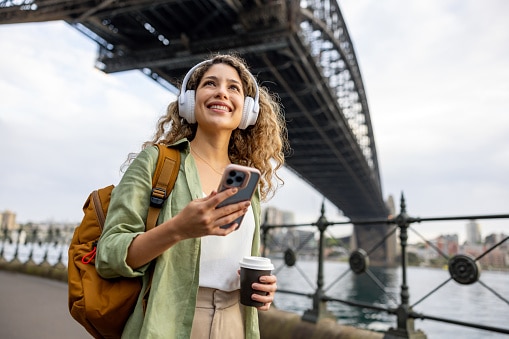
Prolonged exposure to any sound at or above 85 decibels (dB) can cause hearing damage. [1] The louder the volume gets, the faster it can damage your hearing, with sound at 120 dB causing almost immediate damage.
Music through your headphones at max volume can reach levels up to 110 dB, making it incredibly easy to exceed the threshold for hearing damage. If you’re in the habit of playing your music too loud, try setting decibel limits in your headphone settings to protect your hearing.
Cleaning Their Ears With Cotton Swabs
Cleaning your ears with cotton swabs may feel effective, but in reality, it is more likely to cause an earwax blockage or tear your eardrum. Despite the risk, many people fall into the habit of sticking cotton swabs in their ears.
A survey study consisting of 229 completed surveys found that 95.6% of participants used cotton swabs for ear care, 60.3% of whom used the swabs to remove earwax.[2] A stunning 14.4% of those respondents reported daily use.
Earwax moves out of the ear on its own. However, there are cases where the wax gets impacted. If you feel like earwax is blocking your ear canal, contact Benke Ear Nose & Throat Clinic to schedule an ear exam and professional wax removal. If you’re prone to earwax blockages, we may recommend wax softening drops and suction to remove the built-up wax.
Skipping Regular Checkups
Regular hearing tests help us track your hearing over time, paving the way for early diagnosis and intervention for hearing loss. If it’s been a while since your last hearing test, schedule one with our specialists at Benke Ear Nose & Throat Clinic. We can spot problems and offer more advice on caring for your hearing going forward.
[1] National Institute on Deafness and Other Communication Disorders. (2025, April 16). Noise-induced hearing loss. National Institute on Deafness and Other Communication Disorders. https://www.nidcd.nih.gov/health/noise-induced-hearing-loss
[2] Weissman, B., Chowdhury, S., Mattin, M. D., Viola, F., & Flanagan, O. L. (2025). Ear-Rational Behavior: A Survey Study of Q-tip (Cotton Swab) Habits and Health Perceptions. Cureus, 17(9), e92402. https://doi.org/10.7759/cureus.92402