When you get diagnosed with hearing loss, your specialist will classify it in terms of degrees and recommend a few hearing aid options, including:
- Behind-the-ear (BTE)
- Receiver-in-the-canal (RIC)
- In-the-ear (ITE)
- In-the-canal (ITC)
- Completely-in-the-canal (CIC)
- Invisible-in-the-canal (IIC)
Let’s look at each of those degrees, using the World Health Organization’s chart, compare them to A-weighted decibels (dBA) levels from a Yale chart and look at which hearing aids can benefit you.
Slight to No Hearing Loss
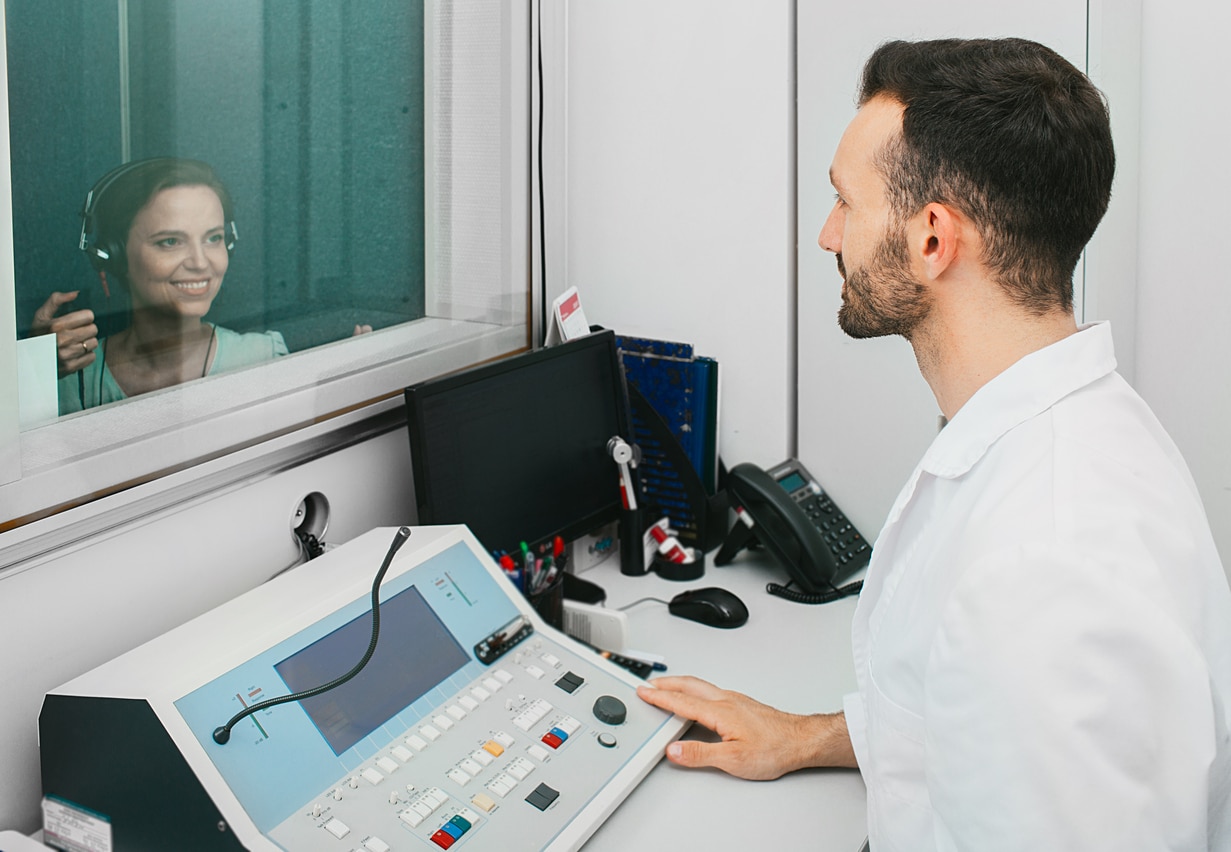
Slight to no hearing loss means you can hear sounds at or above 25 dBA, about the volume of a whisper. If your hearing falls within this range, you likely won’t need to take further steps at this time, though you should continue to schedule regular hearing tests.
Mild Hearing Loss
With mild hearing loss, you can hear sounds between 26 and 40 dBA or louder. That could mean you can hear anything from whispers to a suburban area at night. Mild hearing loss is when you typically start noticing the symptoms. You may occasionally struggle to understand speech during conversations, or notice that birdsong in Carver Park is missing.
If we diagnose you with mild hearing loss, we can manage it with hearing aids ranging from IIC devices to BTE options.
Moderate Hearing Loss
Moderate hearing loss means that you can hear sounds between 41 and 60 dBA or above. That includes anything from a suburban night to a normal conversation.
Any style from CIC devices to BTE options is available for people with moderate hearing loss.
Severe Hearing Loss
With severe hearing loss, you can hear between 61 and 90 dBA or above. You may be able to hear something as quiet as a normal conversation or a telephone dial tone.
People with severe hearing loss may benefit from ITE, BTE or RIC devices, though which device works best will depend on where you fall on the 61 to 80 dBA range.
Profound Hearing Loss
With profound hearing loss, you won’t be able to hear anything below 81 dBA, or louder than a telephone dial tone. Because profound hearing loss covers anything above 81 dBA, it’s possible that anything from a telephone dial tone to an emergency siren could be imperceptible.
BTE hearing aids offer the greatest amplification for profound hearing loss.
After you take your hearing test, your specialist will walk you through your different hearing aid options and give you advice on how to manage the condition moving forward. For more information or to schedule an appointment with one of our specialists, contact Benke Ear Nose & Throat Clinic today.